The NIGMS Human Genetic Cell Repository, sponsored by the National Institute of General Medical Sciences, provides scientists around the world with resources for cell and genetic research. Established in 1972 at the Coriell Institute for Medical Research, the NIGMS Repository contains more than 12,000 cell lines, primarily fibroblasts and transformed lymphoblasts, and more than 6,500 DNA samples. Currently, the NIGMS HGCR catalog also contains over 200 iPSC lines.
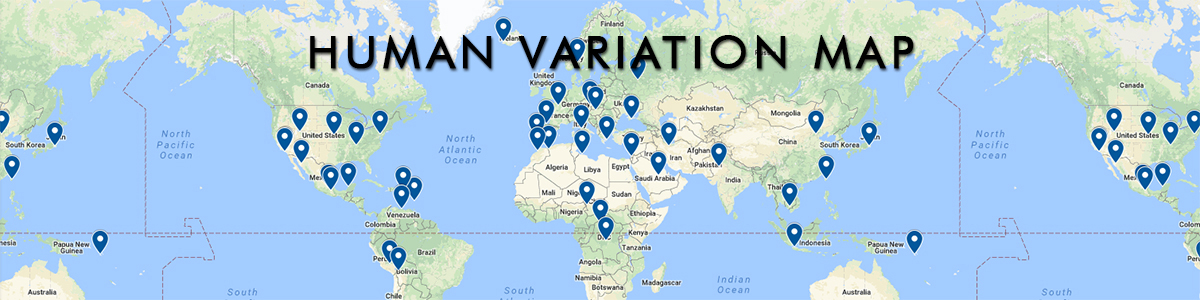
Repository samples represent a variety of disease states, chromosomal abnormalities, apparently healthy individuals, and many distinct human populations. These samples comprise over 1,100 different OMIM diagnoses, and have been referenced in over 8,100 scientific publications.
Data on this website and information derived from the samples in the NIGMS Repository may not be used to determine the identity of any individual who provided a sample. Sample data available in the NIGMS Repository regarding race and/or ethnicity is self-reported information provided by sample submitters. Please direct any questions about these policies to NIGMS@coriell.org.
A single change in the human genome can cause disease, yet when scientists try to create a disease model in the lab, identifying and fixing that precise change can be surprisingly difficult. In 2014, researchers at the Gladstone Institute of Cardiovascular Disease, in Bruce Conklin's lab, developed a method to more efficiently isolate and fix these "typos" using induced pluripotent stem cells (iPSCs).
read moreSkraban-Deardorff Syndrome (SKDEAS) is a rare genetic disorder, first described in 2017 at the Children's Hospital of Philadelphia (CHOP), caused by variants or microdeletions in the WDR26 gene. Symptoms of SKDEAS vary from patient to patient but can include varying degrees of developmental delays, speech delays, delays in motor skill development, and seizures.
read moreDr. Nancy Wexler’s groundbreaking research transformed our understanding of Huntington’s disease, a devastating inherited brain disorder. Inspired by her mother’s diagnosis, Wexler led landmark genetic studies in Venezuela that identified the first DNA marker for Huntington’s—an achievement that paved the way for new discoveries in human genetics and inspired the Human Genome Project. Her ongoing work as president of the Hereditary Disease Foundation and the legacy of her biobank samples continue to fuel scientific breakthroughs for Huntington’s and other genetic diseases.
read more